¿Cuáles son los requisitos de seguro para los airbags en instalaciones de gimnasia?
Nos reunimos con Wendy Martin, directora general de Athletics ICC Insurance Services, para averiguar qué seguros buscan realmente los aseguradores cuando una instalación de gimnasia instala un airbag de aterrizaje.
El seguro es uno de esos temas que los propietarios de gimnasios suelen pensar solo cuando algo los obliga a hacerlo. Se produce una situación inesperada y de repente estás al teléfono intentando averiguar si el airbag La instalación afecta a tu cobertura.
Así que nos dirigimos directamente a la fuente. Hablamos con Wendy Martin, directora general de Atletismo Servicios de Seguros ICC, Wendy es una de las principales agencias de seguros de Estados Unidos especializadas en deportes de alto riesgo como el gimnasia, el cheerleading, el ninja, el parkour y otros. Wendy es una gimnasta desde siempre. También compitió en la Universidad de Michigan, fue entrenadora en la Universidad de Maryland durante siete años y trabajó durante años en la industria en Alpha Factor y GK Elite Sportswear antes de entrar en el mundo de las aseguradoras. En otras palabras, conoce ambos lados de la industria.
Esto es lo que nos dijo.
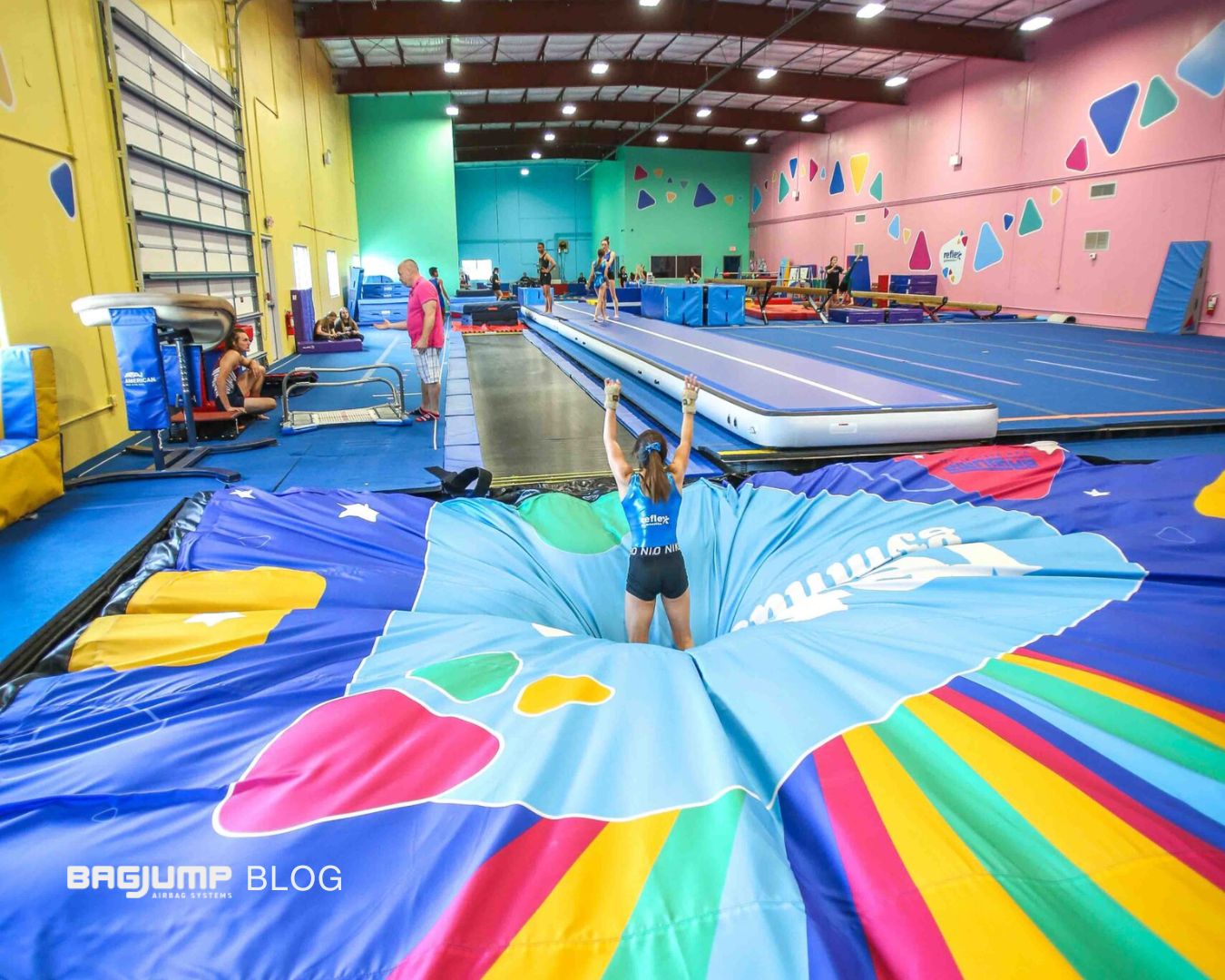
Los airbags están reemplazando gradualmente los cojines de espuma, y los aseguradores se han dado cuenta de ello.
Antes de nuestra llamada, Wendy contactó a todos los operadores con los que su agencia trabaja y les preguntó qué opinión tienen sobre este tema. El patrón que salió fue claro.
“Con el tiempo, los fosos de espuma están perdiendo popularidad”, nos dijo. “Se debe a los costos de mantenimiento, la higiene y la comodidad. Bagjump ha entrado al mercado y simplemente lo hace más fácil. Es algo que podría surgir, se puede quitar, se puede mover, es desmontable”.”
Uno de sus transportistas lo expresó más directamente. Los hoyuelos de espuma han causado varias lesiones graves a lo largo de los años, principalmente debido a que adultos saltan sin tener en cuenta los límites de peso, o a que los hoyuelos tienen demasiados pocos bloques de espuma para poder detener de forma segura una caída.
Los airbags son un perfil diferente. Wendy trabaja en seguros desde 2022 y durante ese tiempo No ha visto ni una sola reclamación relacionada con un Bagjump.
“El uso de un airbag ayudaría a eliminar algunos de estos riesgos”, dijo, “siempre y cuando se apliquen todas las medidas de seguridad de forma adecuada”.”
¿Qué quieren realmente ver los operadores?
La mayoría de las compañías aéreas no tienen reglas estrictas sobre los airbags. Sí tienen pautas, y estas pautas son coherentes en todo el mercado.
“Tenemos unas pautas que incluyen mantenimiento, limpieza, inspección y el cumplimiento de las pautas y instrucciones del fabricante”, dijo Wendy. “Quienquiera que compre un Bagjump necesita las pautas y instrucciones directamente del fabricante. Para estar seguro hay que hacer X, Y y Z. Y luego hay que haber algo por parte de los propietarios de los gimnasios que diga: ”Sí, estamos haciendo X, Y y Z””.”
En la práctica, esto significa que el propietario del gimnasio debería poder demostrar en cualquier momento tres cosas: primero, que el airbag se mantiene según las instrucciones del fabricante; segundo, que los entrenadores hayan recibido una formación adecuada; y tercero, que alguien supervise regularmente el estado del airbag, ya sea a través de un registro de mantenimiento, una lista diaria de tareas del entrenador o algún otro sistema de registro de datos.
Wendy fue muy específica en cuanto a la parte de formación. “Formar a los entrenadores sobre cómo utilizar el Bagjump, cómo configurarlo, cómo desmontarlo, el riesgo de una presión insuficiente o excesiva, y asegurarse de que todos sepan cómo utilizar el airbag. Estas son las pautas dadas por el asegurador”.”
La trampa de clasificación inflable
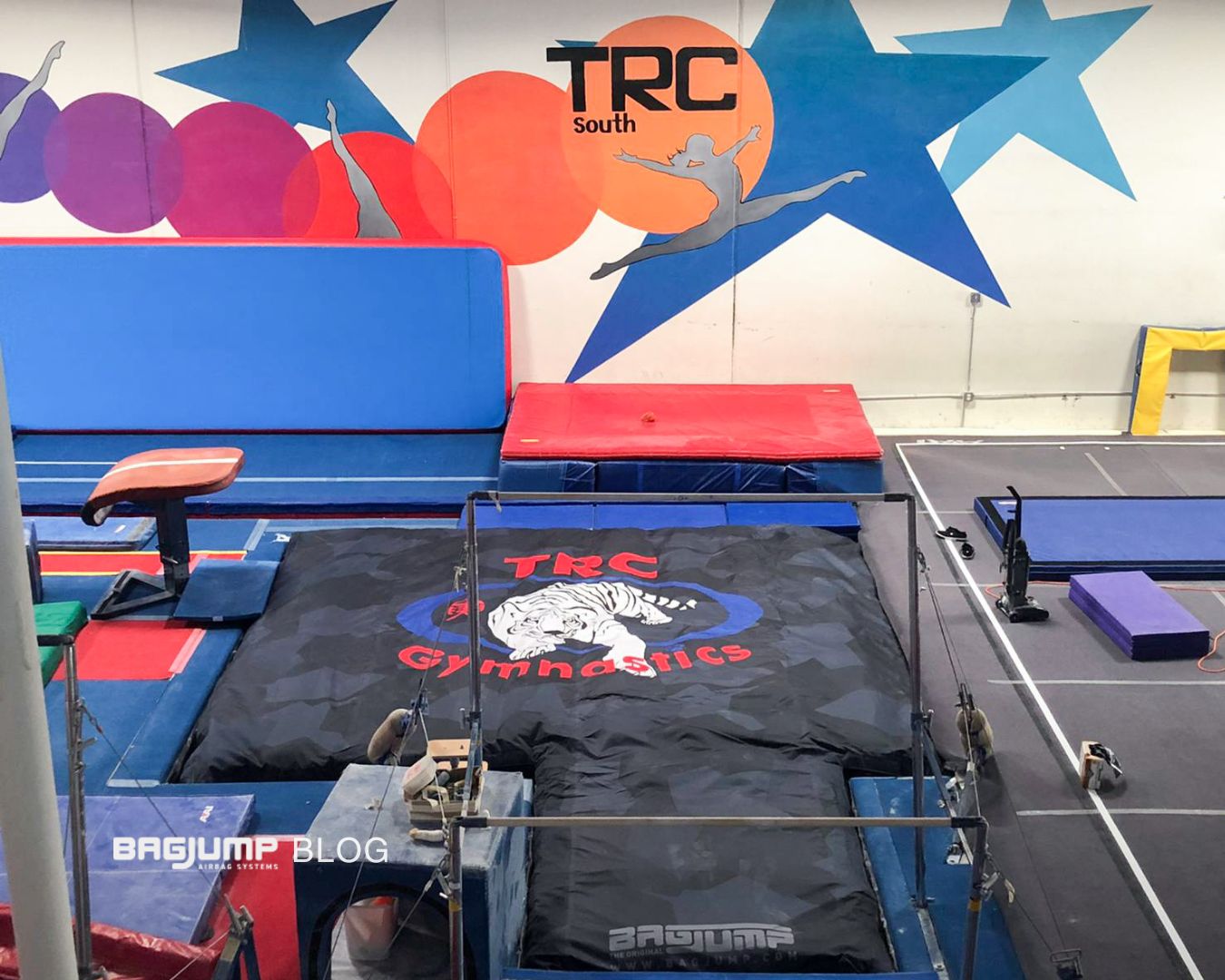
Aquí está la parte que la mayoría de los propietarios de gimnasios no ven venir. Debido a que los airbags funcionan con aire, algunos transportistas los clasifican como inflables. Y algunos transportistas no cubren en absoluto los inflables.
“Cuando la gente lo pone en su solicitud y lo envía a un agente de seguros, quiere asegurarse de que tenga una inyección inflable, o al menos una foto de la inyección inflable”, explicó Wendy. “Para algunos transportistas es una inyección inflable porque funciona con aire. La mayoría de la gente piensa en las inyecciones inflables como una casa inflable. Este es simplemente un dispositivo que funciona con aire. Por eso se incluye en la categoría de inyecciones inflables”.”
La consecuencia es real. “Tenemos algunos transportistas que no cubren los inflables. Así que algunos transportistas no permiten que esto se haga en sus instalaciones. Nosotros, como agentes de seguros, tenemos que saber que no podemos ofrecer un presupuesto para llevar el Bagjump a estos transportistas porque consideran que es un inflable, y no es una opción. Excluirían esto de la póliza. Eso no es bueno.”
Wendy señaló que la presentación también es importante. Las empresas que se especializan en gimnasia y animación son más receptivas cuando el producto se presenta como una alfombra de aterrizaje en lugar de como una atracción de entretenimiento. AirPit para Gimnasia Está diseñado para ese uso específico: un dispositivo de entrenamiento de gimnasia profesional, no un paseo en un parque de trampolines.
“Están buscando algo más básico”, dijo ella. “Lo estás usando como plataforma de aterrizaje. No estás instalando cinco barras seguidas para que la gente pueda girar y aterrizar”.”
El precio sigue siendo el mismo. La decisión se basa en la compatibilidad.
Una pregunta que todos los propietarios de gimnasios hacen: ¿El airbag cuesta más de lo que cuesta asegurar un agujero de espuma? Según Wendy, en este momento la respuesta es no.
“En este momento, el precio sigue siendo el mismo. No cambia”, dijo ella. “Entonces ¿qué te cuesta más? Probablemente es más caro tener un pozo que tener un Bagjump. Hay que cambiar los cubos de espuma constantemente. Es una tarea de mantenimiento que requiere tiempo. El mantenimiento del Bagjump no es tan grande, pero hay que asegurarse de que se mantenga al día con él”.”
Esto cambia la decisión hacia lo que realmente importa. ¿Qué producto se adapta a tu instalación, a tus recursos de entrenamiento, a tus atletas y a tu capacidad de mantenimiento? Para programas de nivel más bajo y gimnasios que buscan una superficie de aterrizaje móvil, los airbags suelen ser la mejor opción. Para habilidades de nivel más alto en gimnasios con un equipo de entrenamiento limitado, un pozo de espuma puede seguir teniendo sentido en algunos casos.
Wendy compartió un ejemplo personal de su propia trayectoria profesional. “Me gradué en la Universidad de Michigan y cuando llegamos allí no teníamos una zona de formación en espuma. Teníamos habilidades de alto nivel. Solo teníamos ropa de entrenamiento. Un airbag de Bagjump hubiera sido genial. Hubiera sido maravilloso, porque estábamos aterrizando en ropa de entrenamiento que no se hundía con nosotros.”
El lugar de trabajo importa más de lo que los propietarios se dan cuenta
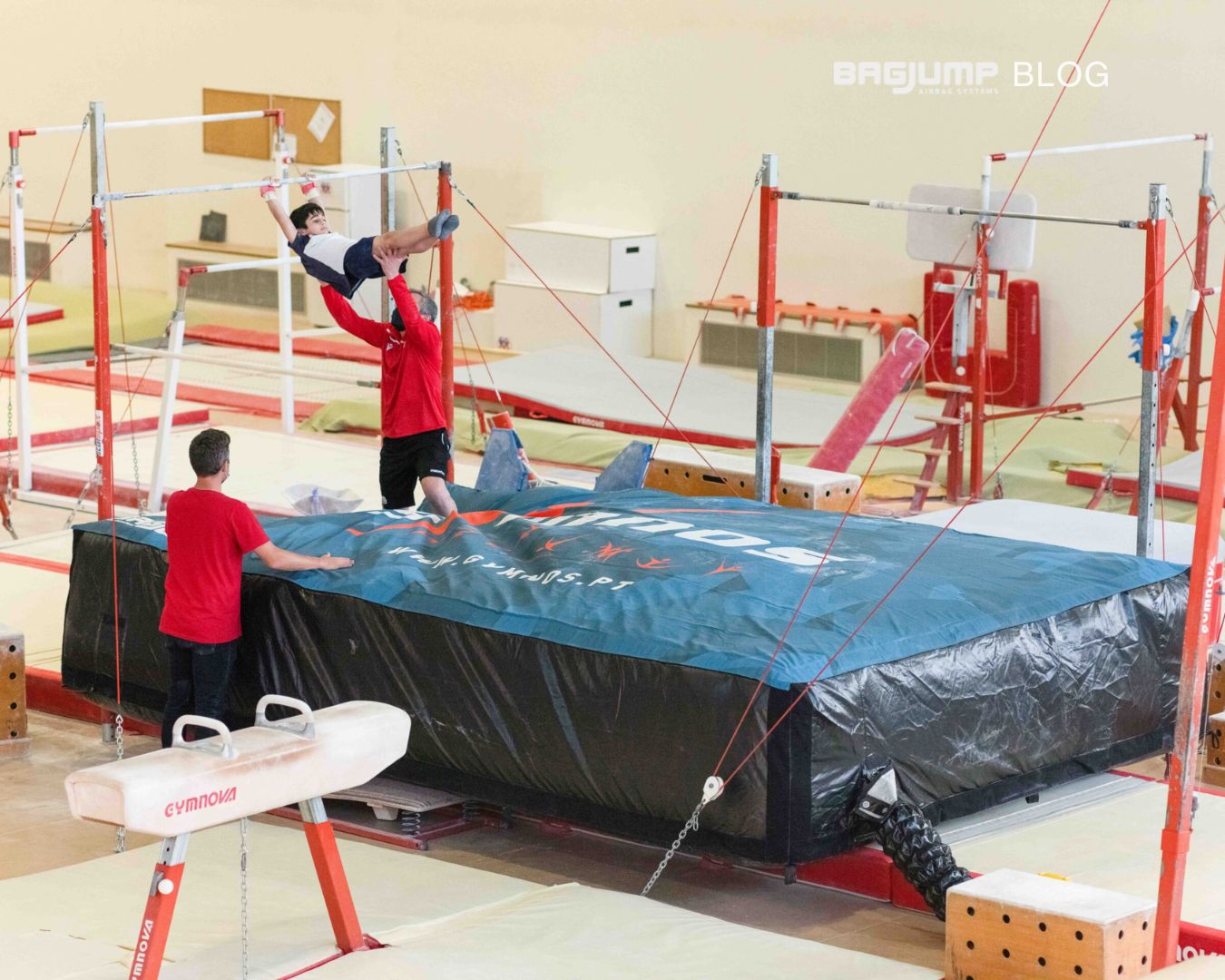
Cada instalación se construye de forma diferente, y cada decisión sobre la ubicación de los airbags es específica del espacio.
“Todos tienen que pensar en su espacio”, dijo Wendy. “¿Es un Bagjump adecuado contra una pared? En tal caso, al menos hay que empuñar el colchón contra la pared, para que si se gira un poco demasiado, no pase nada?”
La ventaja sobre un pozo de espuma es precisamente esta flexibilidad. “El Bagjump es muy apetecible porque se puede levantar, se puede bajar, se puede mover. Se puede colocar en el suelo de la primavera y hacer ejercicios sobre él, y luego se puede quitar del suelo durante días mientras se realizan rutinas.”
Esta flexibilidad es una de las principales razones Las instalaciones de gimnasia están optando por los airbags sobre instalaciones permanentes.
¿Qué sucede si se presenta una reclamación?
Si una lesión en un airbag da lugar a una demanda judicial, la investigación sigue un camino predecible.
“Habrá muchas cosas que tendrán que tener en cuenta”, dijo Wendy. “Número uno: ¿los entrenadores hicieron lo que se les informó en X, Y y Z por parte del personal de Bagjump? ¿Les demos instrucciones y orientación? ¿El aire no funcionaba? ¿Alguien no verificó algo? Será negligencia. Intentarán averiguar qué pasó con la bolsa”.”
Dependiendo de las respuestas, la responsabilidad puede recaer en el fabricante, el propietario del gimnasio o el equipo de entrenamiento. Por eso, la documentación y la formación periódica son tan importantes.
“Educar a los entrenadores y hacerlo de forma regular”, dijo Wendy. Era firme en cuanto a nuestro rol como fabricante. “Solo hay que recordar que, como fabricante de productos, es nuestra tarea garantizar que todo el mundo se beneficie. La gente simplemente vende un producto y se va. Pero este producto probablemente estará en los gimnasios de la gente durante años”.”
Por eso, todas las instalaciones de Bagjump incluyen formación, y por eso nuestro Equipo de soporte Las garantías son válidas durante toda la vida útil del airbag.
Las exenciones no son opcionales
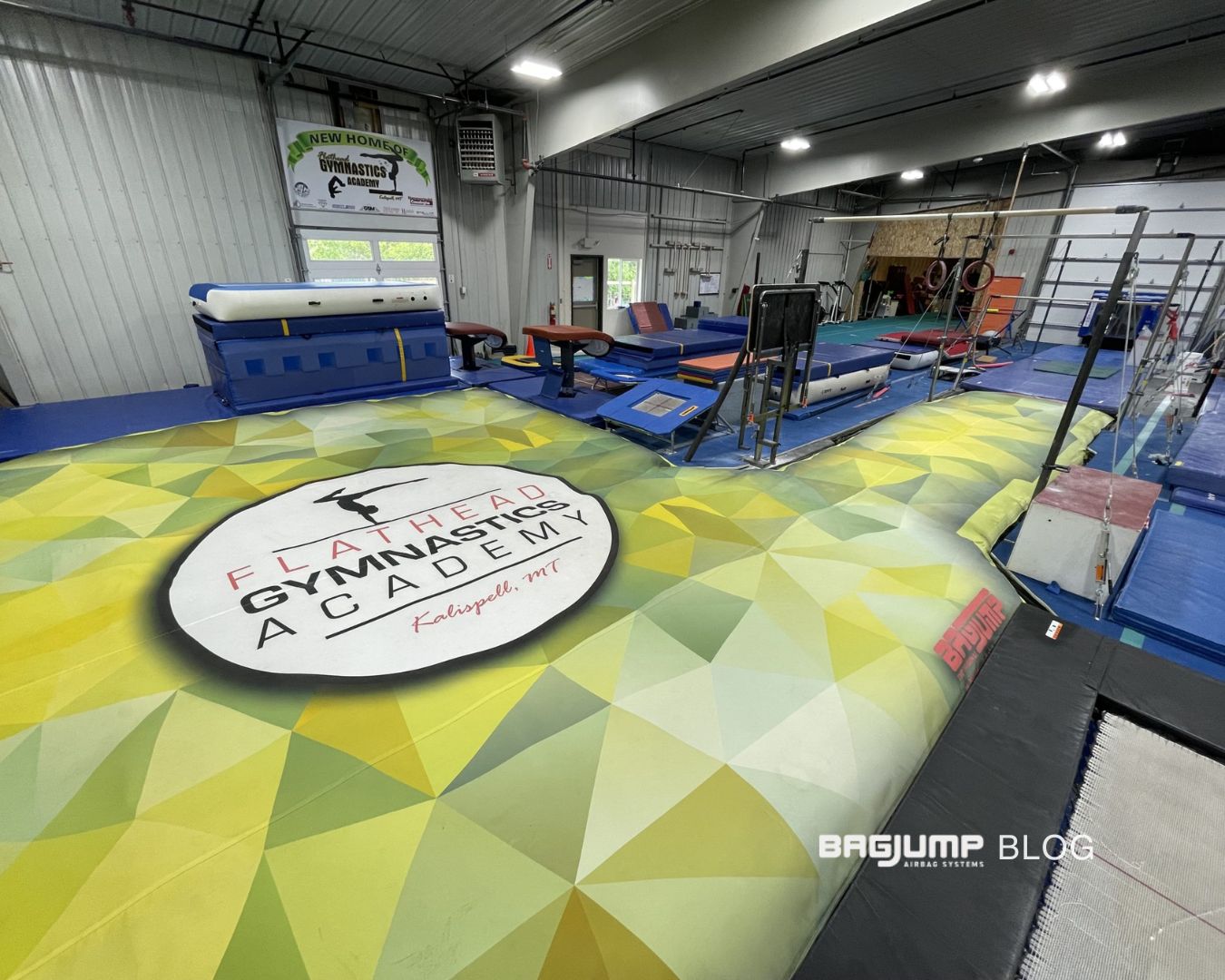
El último punto que hizo Wendy fue el más directo. Toda persona que utilice o demuestre el airbag debe firmar un documento de renuncia.
“Muchas personas piensan que no hace nada”, dijo. “Sin embargo, lo que hace la exención es defender al propietario del gimnasio. Si no tienen una exención para alguien, la compañía de seguros puede rechazar una reclamación porque dirá: ”No es tu atleta, no tenemos que cubrir esto”.”
Los airbags de Bagjump se están convirtiendo en la sustitución estándar de los pozos de espuma en los centros de gimnasia, y las compañías de seguros están siguiendo esta tendencia. Los requisitos no son complicados. Indique el airbag en su solicitud. Colócelo en un soporte que lo acepte. Siga las instrucciones del fabricante. Forme a sus entrenadores. Registre todos los datos. Recopile la firma de todos los usuarios en un documento de renuncia.
Haz esas cosas y estarás protegido.
El propio resumen de Wendy sobre el producto era breve. “Creo que Bagjump es un producto excelente. Creo que está ayudando a muchos programas que quizás no puedan tener un personal más capacitado en su entrenamiento. Y creo que esto también les ayudará”.”
Muchas gracias a Wendy Martin y al equipo de Atletismo Servicios de Seguros ICC Para la conversación. Para preguntas sobre la instalación de un Bagjump en su instalación de gimnasia, o sobre el La gama completa de airbags de gimnasia de Bagjump, nuestro equipo es disponible aquí.
Seguir leyendo