The Biggest Trends Shaping Park Attractions Today
From record-breaking rollercoasters to airbag attractions and immersive storytelling, here are the trends defining the future of theme and adventure parks.
The world of park attractions is changing fast. Ten years ago, the conversation was mostly about who could build the tallest rollercoaster or the biggest water slide. That still matters, but the industry has moved on. Today, the parks winning attention are the ones building for flexibility, interactivity, sustainability, and broader audiences.
This article looks at the trends shaping park attractions right now, using some of the most talked-about recent openings as examples. Whether you operate an adventure park, run a family entertainment center, or just love visiting them, these are the ideas to watch.
-
Records Still Matter, and the Middle East Is Setting Them
The race for the tallest, fastest, and longest is not over. It has just shifted geography. The most ambitious rollercoaster projects of the last few years have opened in the Middle East, where investment in destination resorts has outpaced almost every other region.
The example: Falcon’s Flight at Six Flags Qiddiya in Saudi Arabia. When it opens, it will be the tallest, fastest, and longest rollercoaster in the world. Speeds reach 250 km/h across a three-minute ride that takes visitors across the entire park, with a 160-meter drop that makes it the new benchmark for extreme rides.
What it tells us: Record-breaking still generates the biggest headlines in the industry. But the money and the ambition are increasingly concentrated in a handful of destination projects rather than spread across dozens of smaller parks. For most park operators, competing on records is not the play. Competing on experience, throughput, and repeat visits is.
2. Flexible, Movable Attractions Are Replacing Fixed Structures
One of the biggest shifts in the last five years has been the rise of modular, movable attractions that can be reconfigured or repositioned as a park evolves. Operators no longer want to commit to a single permanent structure that dictates their layout for the next twenty years.
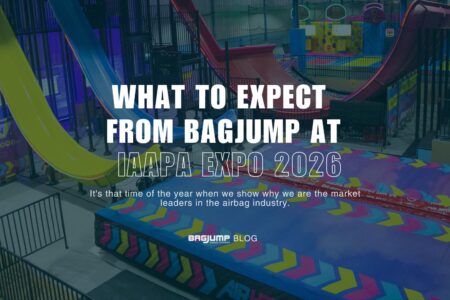
The example: Bagjump Jump & Slide Parks. Focused on the thrill of facing your fears, freefalling, and testing your endurance on a Ninja Course, the Bagjump Jump & Slide Park is a modular attraction concept that has been installed at several parks across Europe and the US in recent years. The setup features tubing jump slides, multi-level jump towers, and trampoline airbag stations, and can be scaled up or down based on the operator’s space and audience.
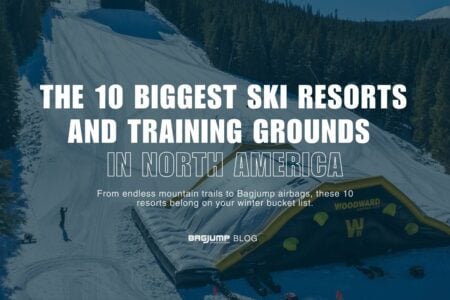
What it tells us: Flexibility beats permanence. Operators want attractions they can adjust as they learn what works. Airbag-based attractions have led this trend because they install fast, run seasonally or year-round, and can be moved without excavation. The same logic is why ski resorts have started using airbag attractions to earn revenue in summer.
3.IP-Driven Immersive Storytelling
Attractions built around known intellectual property continue to dominate the biggest openings. But the trend has moved beyond “here’s a ride with a movie theme” toward full environments where the story is the attraction.
The example: LEGOLAND Germany’s Pirate Land. The area transports families into the Lego world with themed rides, interactive attractions, and pirate-themed accommodations. Highlights include a pirate ship battle ride and an escape-room-style adventure. It is not one attraction. It is a whole environment.
What it tells us: Storytelling has become as important as the mechanics. Even mid-sized parks are investing in themed environments rather than standalone rides, because immersion drives repeat visits and higher spending per visitor.
-
Multi-Land Mega Parks
The mega park concept, where a single site hosts multiple themed lands with dozens of attractions each, has become the dominant model for large-scale new builds. It combines the record-breaking ambition of trend one with the storytelling depth of trend three.
The example: Universal Studios’ Epic Universe in Orlando. The park features several themed lands with dozens of attractions, including the Dark Universe area built around Universal’s classic horror IP. Cutting-edge technology, layered storytelling, and enough content for multi-day visits define the concept.
What it tells us: The biggest players are betting on scale and content depth. For smaller parks, the takeaway is different. You cannot outbuild Universal, but you can outmaneuver them on price, accessibility, and localized experiences.
-
Interactive and Sensory Experiences
The old model of a passive ride, where you sit and watch the scenery, is being replaced by attractions that actively involve the visitor. Interactivity, choice, and sensory feedback have become expected features rather than premium add-ons.
The example: Mission Bermuda at Futuroscope in France. The attraction immerses visitors in an underwater adventure with sunken ships, mythical creatures, and a storyline that plays a central role in the experience. Storytelling and interactivity carry the attraction more than the mechanics.
What it tells us: Visitors, especially younger ones, expect to influence the outcome of their experience. Attractions that offer no interaction feel dated. Even simple choice mechanics, like picking a path or triggering an event, dramatically improve visitor satisfaction and social sharing.
-
Conservation and Education Woven Into Entertainment
A growing share of new attractions are being designed with an educational or conservation message built into the experience rather than tacked on as signage.
The example: SeaWorld Orlando’s Arctic Flying Theater. The ride transports visitors through the Arctic’s landscapes with polar wildlife encounters, and pairs the entertainment with a conservation message about the fragility of the region. The story about the environment is part of the ride, not a separate exhibit.
What it tells us: Younger audiences respond to attractions that stand for something. Parks that integrate conservation, education, or cultural themes into the entertainment itself build stronger emotional connections with visitors and get more social media coverage as a result.
7. Broader Audience Appeal
The biggest attraction openings of the last few years have consciously targeted broader audiences. The old model of adrenaline-only or families-only parks has softened. New attractions are being built to appeal across age groups, thrill tolerance levels, and interest categories.
The example: This is the trend behind almost every attraction on this list. Jump & Slide Parks appeal to families with kids from age six through teenagers and adults. Epic Universe has zones for horror fans, kids, and everyone in between. Even Falcon’s Flight, an extreme coaster, is part of a broader park designed to serve non-riders.
What it tells us: The single-audience park is nearly extinct. Operators building for repeat visits and family group ticketing need attractions that give everyone in the group something to do. This is one of the reasons airbag-based attractions have taken off. They serve first-timers, families, and thrill-seekers on the same setup.
What This Means for Park Operators
The trends above are not equally accessible to every operator. Falcon’s Flight is a billion-dollar project. Epic Universe is bigger. But the underlying logic works at every scale.
Operators of trampoline parks, adventure parks, family entertainment centers, and ski resorts are all facing the same core question: how do you keep attracting audiences that expect more variety, more interactivity, and more flexibility than ever? The answers are the same at every level:
- Choose attractions that adapt as your business grows
- Prioritize experiences that engage rather than entertain passively
- Build around audience breadth, not narrow demographics
- Design for storytelling and shareability
- Plan for year-round or extended-season revenue where possible
For a look at how these trends are playing out at the trampoline park level, see the Bagjump attractions for trampoline parks guide. For gymnastics facilities, the same principles apply to equipment upgrades. And the full ROI picture for any airbag-based investment usually plays out over one to three seasons.
Frequently Asked Questions
What is the biggest rollercoaster in the world? Falcon’s Flight at Six Flags Qiddiya in Saudi Arabia is set to become the tallest, fastest, and longest rollercoaster in the world, with a 160-meter drop and speeds of 250 km/h.
What is the biggest new theme park opening in recent years? Universal Studios’ Epic Universe in Orlando is the largest new mega park to open in North America in over two decades, featuring multiple themed lands and dozens of attractions.
What is a modular attraction? A modular attraction is an installation that can be reconfigured, expanded, or moved without permanent construction. Bagjump Jump & Slide Parks are one of the best examples, combining freedrop towers, tubing landings, and trampoline airbag stations in customizable layouts.
Why are airbag attractions trending in parks? Airbag attractions install quickly, adapt to different space configurations, serve broad audiences, and carry a strong safety and insurance profile. They allow parks to expand their offering without excavation or permanent structural changes.
Which trends should smaller park operators focus on? Smaller operators cannot compete on scale, but they can compete on flexibility, storytelling, and broader audience appeal. Modular attractions like Bagjump Jump & Slide Parks fit that profile well.
Bring the Latest in Airbag Attractions to Your Park
Bagjump has been building airbag attractions for parks, resorts, and event operators since 2010 from our base in Innsbruck, Austria. If you are exploring how to add a flexible, high-appeal attraction to your park, our team is available to walk you through the options.
For a broader look at Bagjump attractions, visit the trampoline parks area page or the adventure and snow area page. For questions about existing installations, our support team is available for the full life of the product.
Read More