How Airbag Progression Increases Trick Complexity (While Reducing Risk)
Airbags are a game changer when it comes to progression in skiing and snowboarding. Here, we explain why.
The Winter Olympic Games in Cortina 2026 are just around the corner, and we are excited to see some of the world’s best athletes competing for gold. Many of these athletes have been using Bagjump airbags to step up their game for years. For them, the Olympic Games represent the highest achievement of their careers. For us, it’s a point of pride that they trust Bagjump to support their progression.
To better explain how airbag progression increases trick complexity, we gathered insights from some of the top experts in the sport. We spoke with Charles Beckinsale, Director of The Stomping Grounds in Saas-Fee, and with Trennon Paynter, current Canadian National Team halfpipe coach and former Olympian. After these conversations, one thing became absolutely clear: airbags are no longer a secondary training tool. They are the backbone of modern progression.
Why Progression Needs a Safer Path
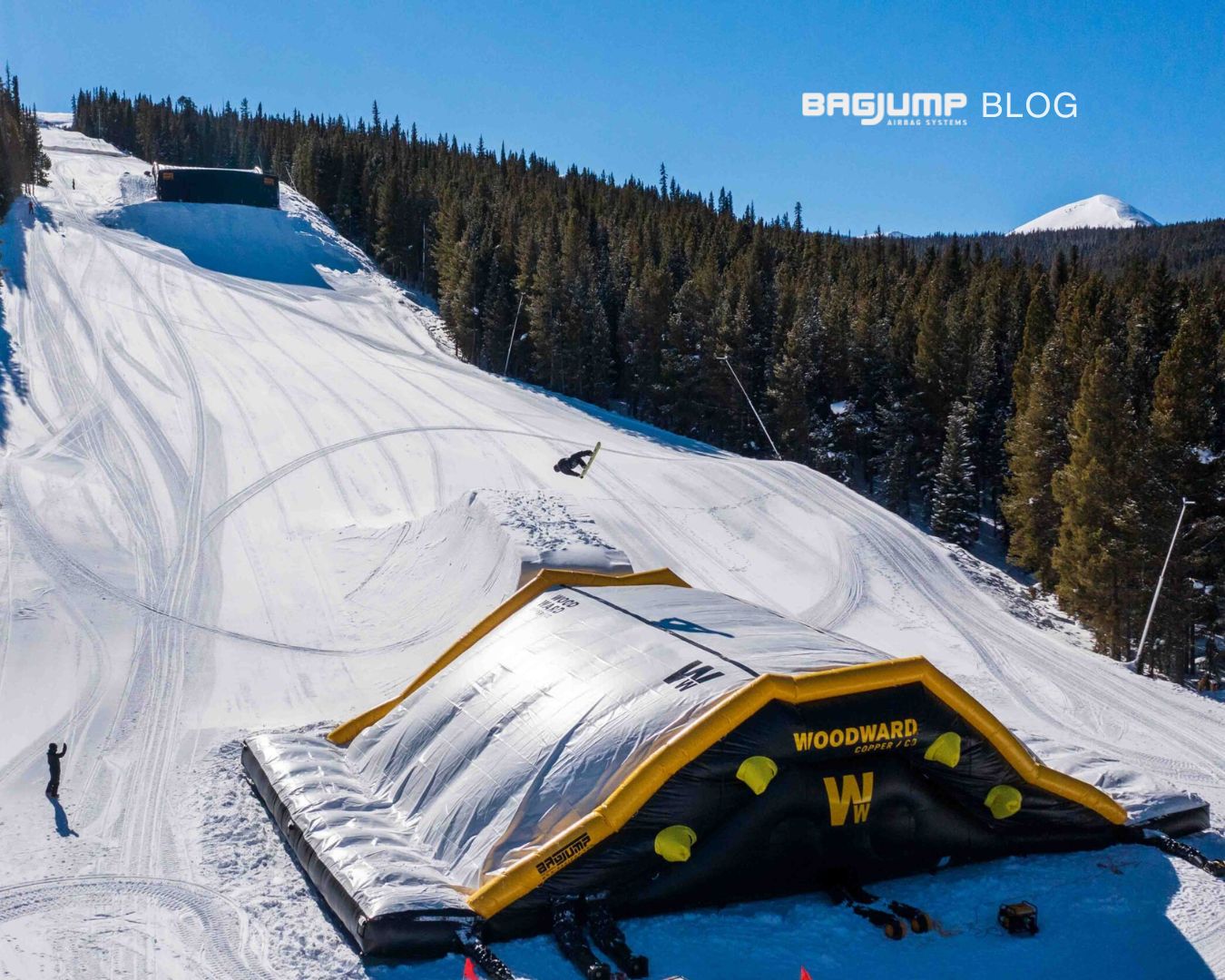
Trick progression in snow sports is not linear. Adding speed, height, and rotations compounds risk quickly. Before snow airbag technology became a key part of the sport, athletes often had to take their first real attempts on snow, where mistakes came with heavy consequences. Injuries, setbacks, and long recovery periods were part of the process.
Bagjump revolutionized the sport. By introducing a controlled landing environment, airbags allow athletes to experiment, fail, and adjust without the physical punishment that snow landings can bring. According to Charles, this freedom is exactly what allows athletes to progress faster while staying healthy. “The sport can evolve because athletes are no longer limited by fear of the first impact,” he said.
From Simple Rotations to Complex Tricks
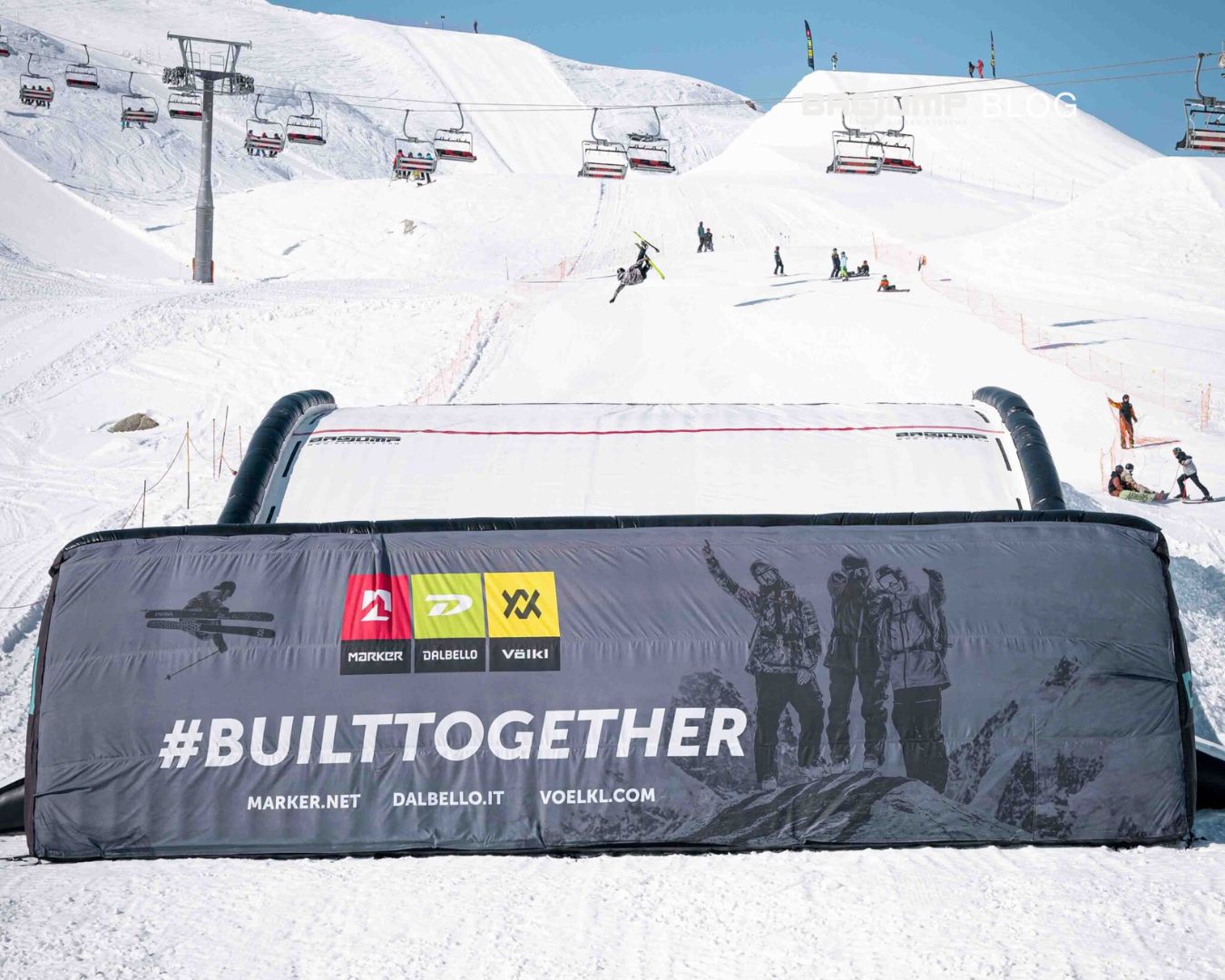
Not every trick requires an airbag. As Trennon explained, “Athletes can often add basic rotations like 180s, 360s, or even 540s without major consequences. Falls from these tricks tend to be manageable. The moment flips are introduced, everything changes.”
Any time an athlete adds a rotation where the head goes underneath the body, the risk level increases dramatically. Single flips, double flips, and especially triple flips demand a different level of safety. This is where Bagjump airbags become essential. “They provide a space where athletes can fully commit to the motion, knowing that a missed rotation won’t result in a violent impact,” Trennon concluded.
This is also why modern progression almost always follows the same path: rotations first, flips next, and only then complex combinations. Trennon was clear that each stage is fully supported by airbag training.
The Two Phases of Airbag Training
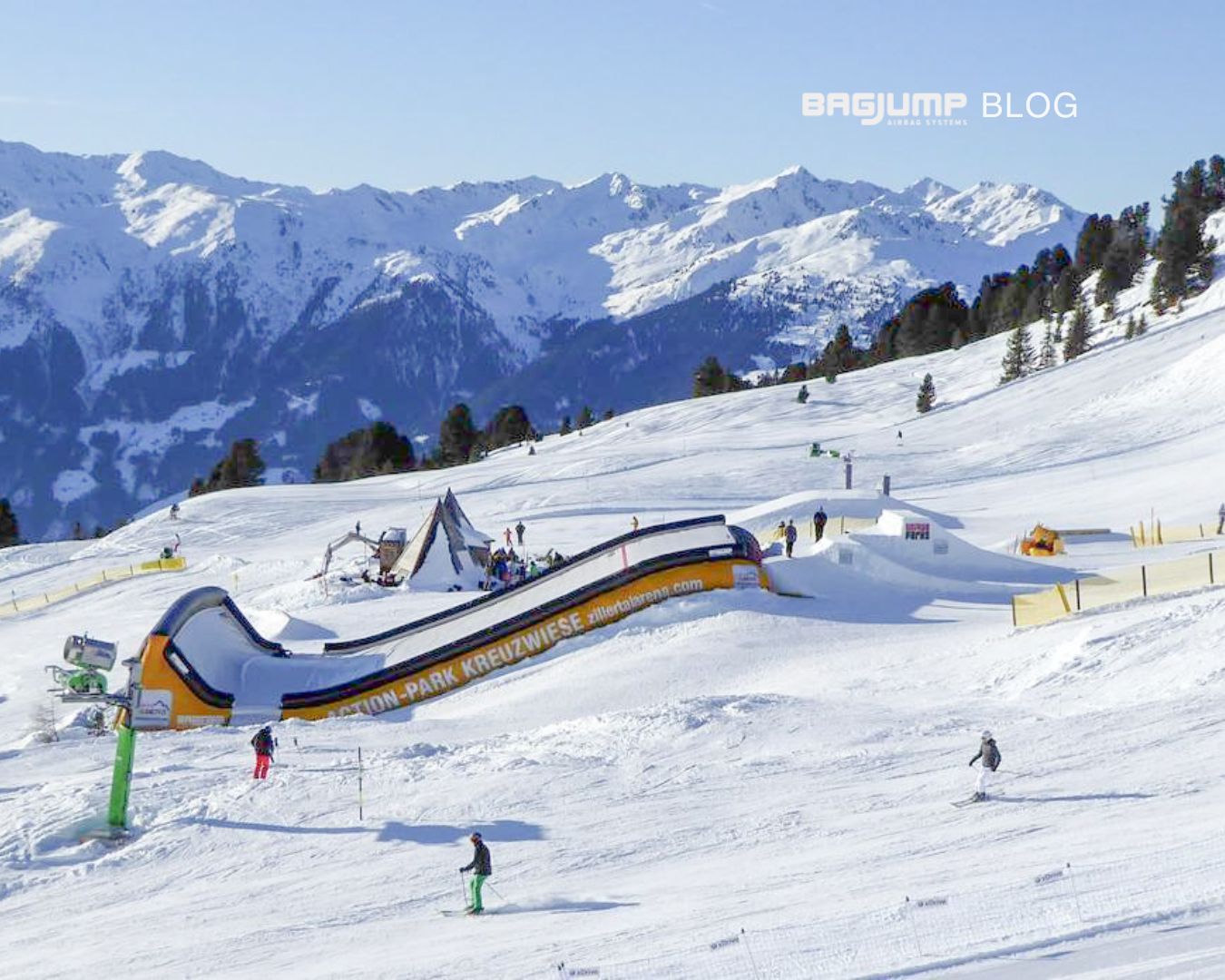
Airbag progression is not just about landing a trick once. Both Charles and Trennon emphasize that true progression happens in two distinct phases.
The first phase is execution. Can the athlete perform the trick at all? This is where fear is removed and experimentation begins. Athletes learn how the trick feels in the air, how quickly it needs to be initiated, and how the body moves through the rotation.
The second phase is consistency. Can the athlete land the same trick in the same place, over and over again?
This second phase is where airbags truly reduce risk. Consistency on an airbag builds spatial awareness and timing. Athletes learn not just how to land, but where they land. That precision becomes critical when transferring tricks to snow.
Why Halfpipe Demands Even More Precision
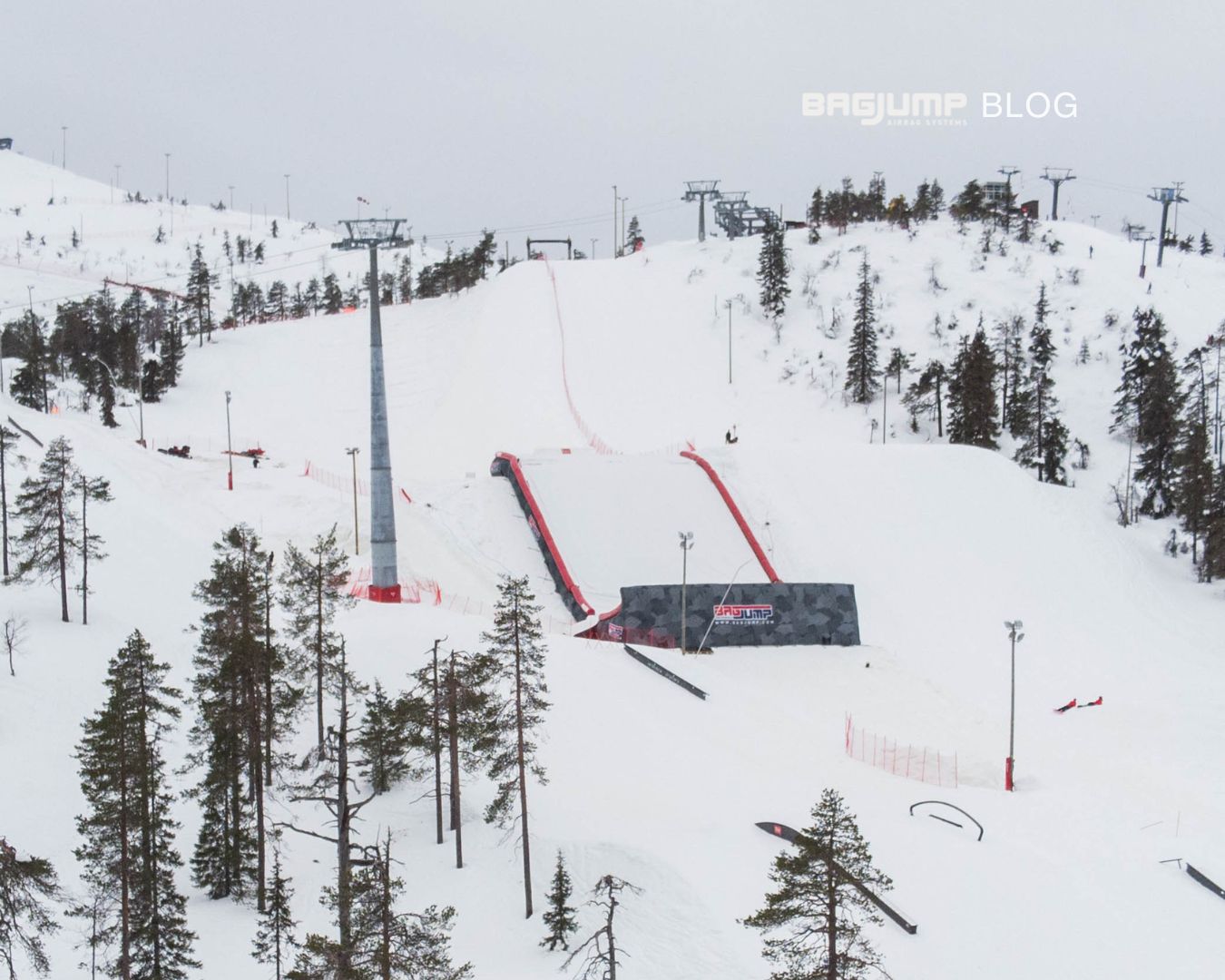
The transition from airbag to snow is not the same across all disciplines. In big air and slopestyle, landing zones are generally wider and more forgiving. Once an athlete is consistent on an airbag, the move to snow is relatively smooth.
Halfpipe is different. In a halfpipe, the margin for error is extremely small. Athletes must land in a specific spot to avoid the deck or the flats. Even perfect execution on an airbag doesn’t automatically guarantee a safe landing in the pipe.
That’s why halfpipe athletes like Australian Scotty James spend so much time perfecting consistency on a Bagjump airbag. These athletes are not just learning the trick; they are training their bodies to land in the exact same place every time. According to Trennon, this precision-focused training is what makes airbags indispensable for halfpipe progression.
Raising the Ceiling of the Sport
Airbags don’t just help individual athletes. They push the entire sport forward.
As top athletes use airbags to break through previous limits, they create a new baseline of what’s possible. As Trennon explained, “Tricks that were once considered impossible become standard. Athletes have already surpassed the predicted ceiling of trick complexity from just ten years ago.”
He also noted how this positively affects the future of the sport. “This effect is especially important for closing gaps within the sport. As women’s freestyle continues to evolve, airbags are playing a major role in accelerating progression toward the same level of trick complexity seen in men’s events. Safer progression opens the door for more athletes to push further, faster.”
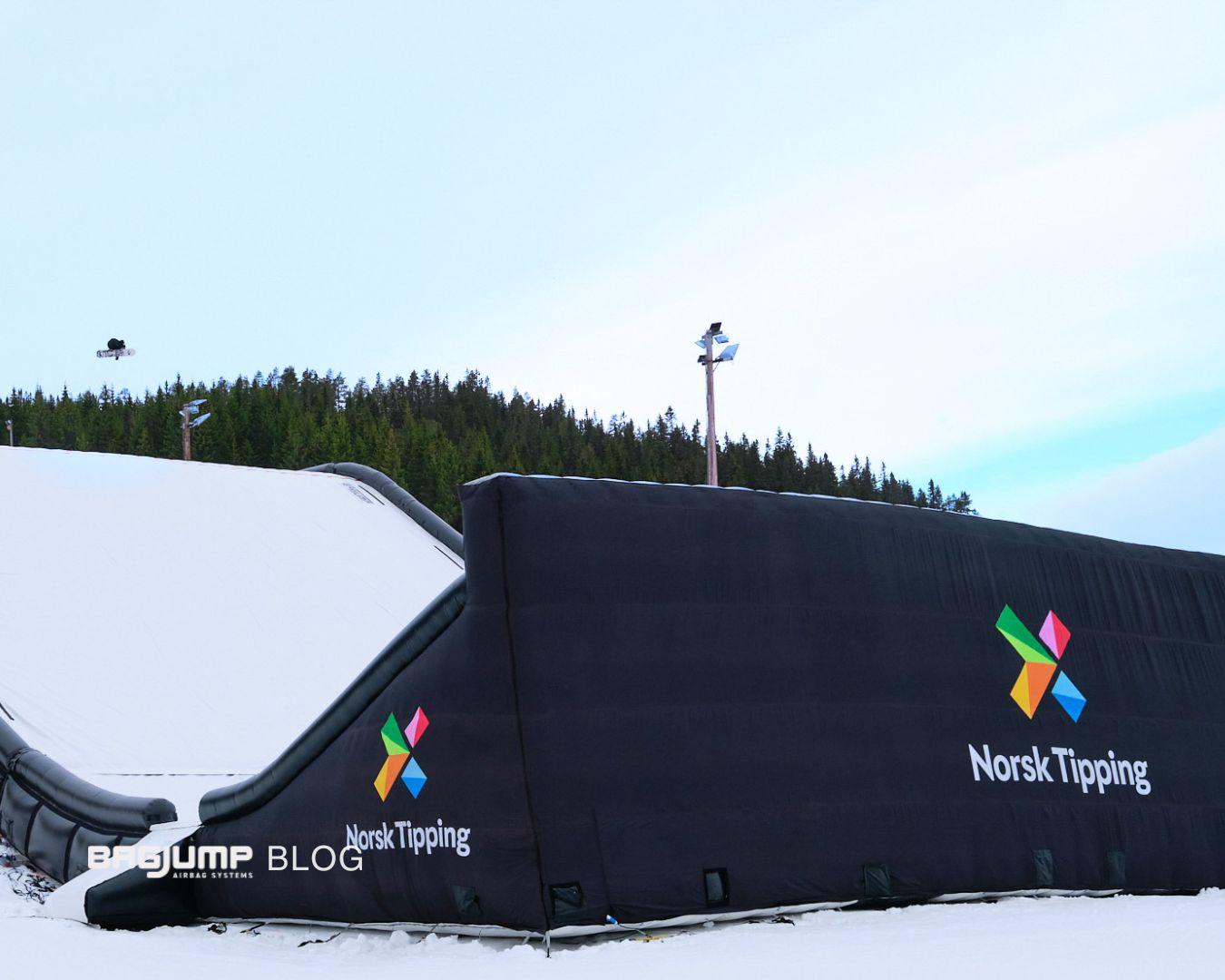
Progression Without Guesswork
The biggest shift airbag progression has brought to snow sports is simple: athletes no longer guess.
Before, first attempts on snow carried uncertainty and fear. Now, by the time an athlete takes a new trick to the mountain, it has already been tested, refined, and mastered in a safer environment.
To be clear, airbags don’t eliminate risk. They manage it intelligently. And in doing so, they allow trick complexity to increase faster than ever before without sacrificing athlete longevity.
That balance is why Bagjump airbags have become one of the most important tools in modern freestyle progression and why the sport will continue to rely on them as it pushes into the future.
Read More