Why Olympic Athletes Use Airbags Before Hitting Snow
Ask any professional athlete what the key tool is for an optimal training environment, and one product comes to mind: Bagjump airbags.
At the Olympic level, progression is no longer about trying and guessing. It’s about precision, repetition, and reducing risk wherever possible. Over the past decade, one particular training tool has become central to that process across snowboarding and freeskiing: airbags.
We sat down with some of the top coaches and athletes participating in the upcoming Winter Olympics in Cortina and discussed the current role of airbags in training and how essential they are for preparation.
In this article, we want to answer one simple question: why do Olympic athletes rely so heavily on airbag training before taking tricks to snow?
Progression Without Punishment
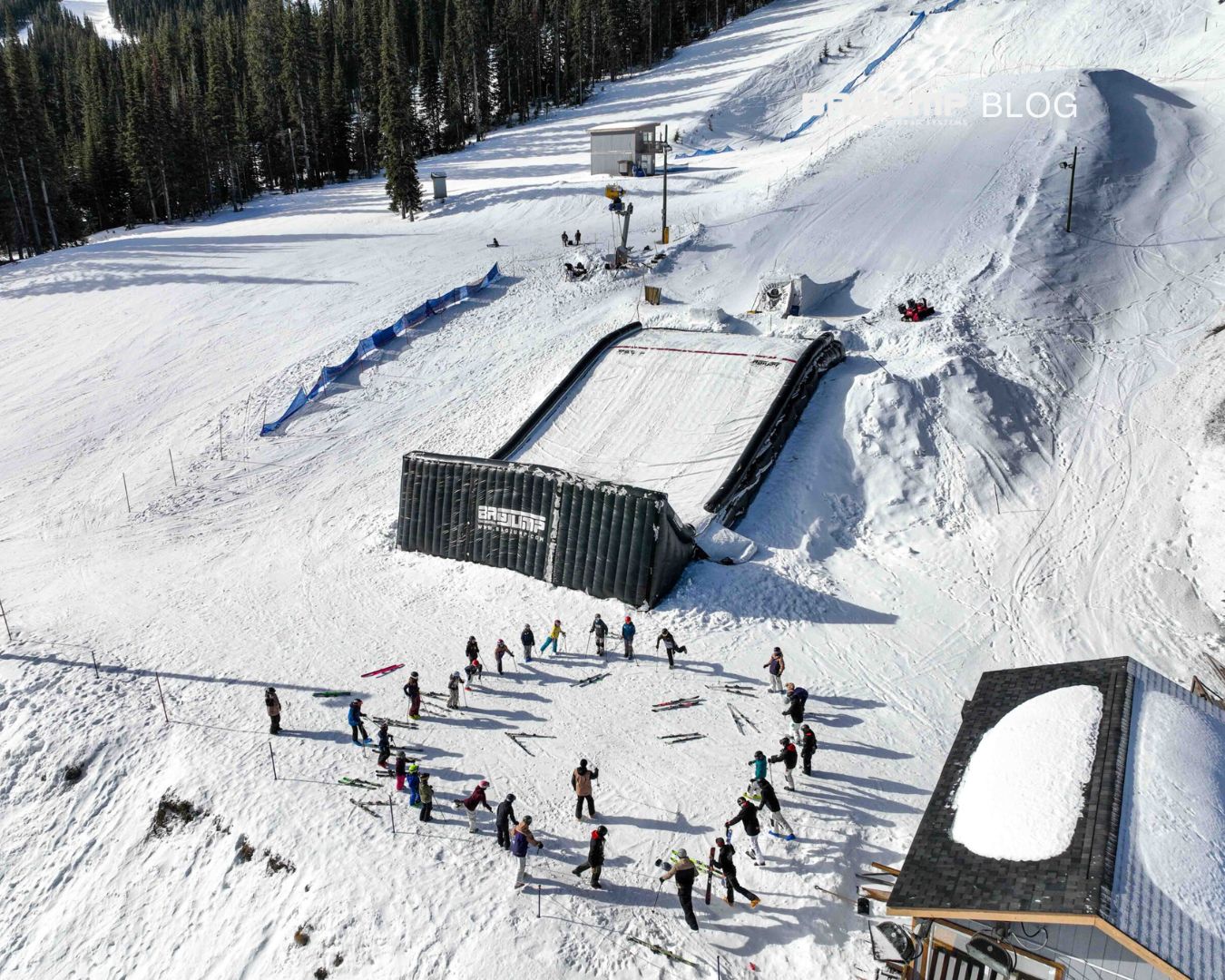
Modern snow sports demand tricks that were almost unthinkable a generation ago. Triple corks, multiple flips, and highly technical off-axis rotations are now expected at the top level. Attempting these for the first time on snow would be extremely risky.
Airbags change that completely.
They allow athletes to try new tricks with minimal physical consequences. Falls that would normally result in injury become part of the learning process instead of a setback. According to Charles Beckinsale, a professional athlete and expert in freestyle skiing and snowboarding, the freedom to fail safely is what allows athletes to truly push the sport forward.
“Instead of holding back out of fear, athletes can commit fully to new movements,” he mentions. “That commitment accelerates progression and allows them to explore the limits of what’s possible without paying the usual physical price.”
Airbags Became the Industry Standard
Trennon Paynter, head coach of the Canadian national halfpipe team, said it loud and clear: at the elite level, airbag training is no longer optional.
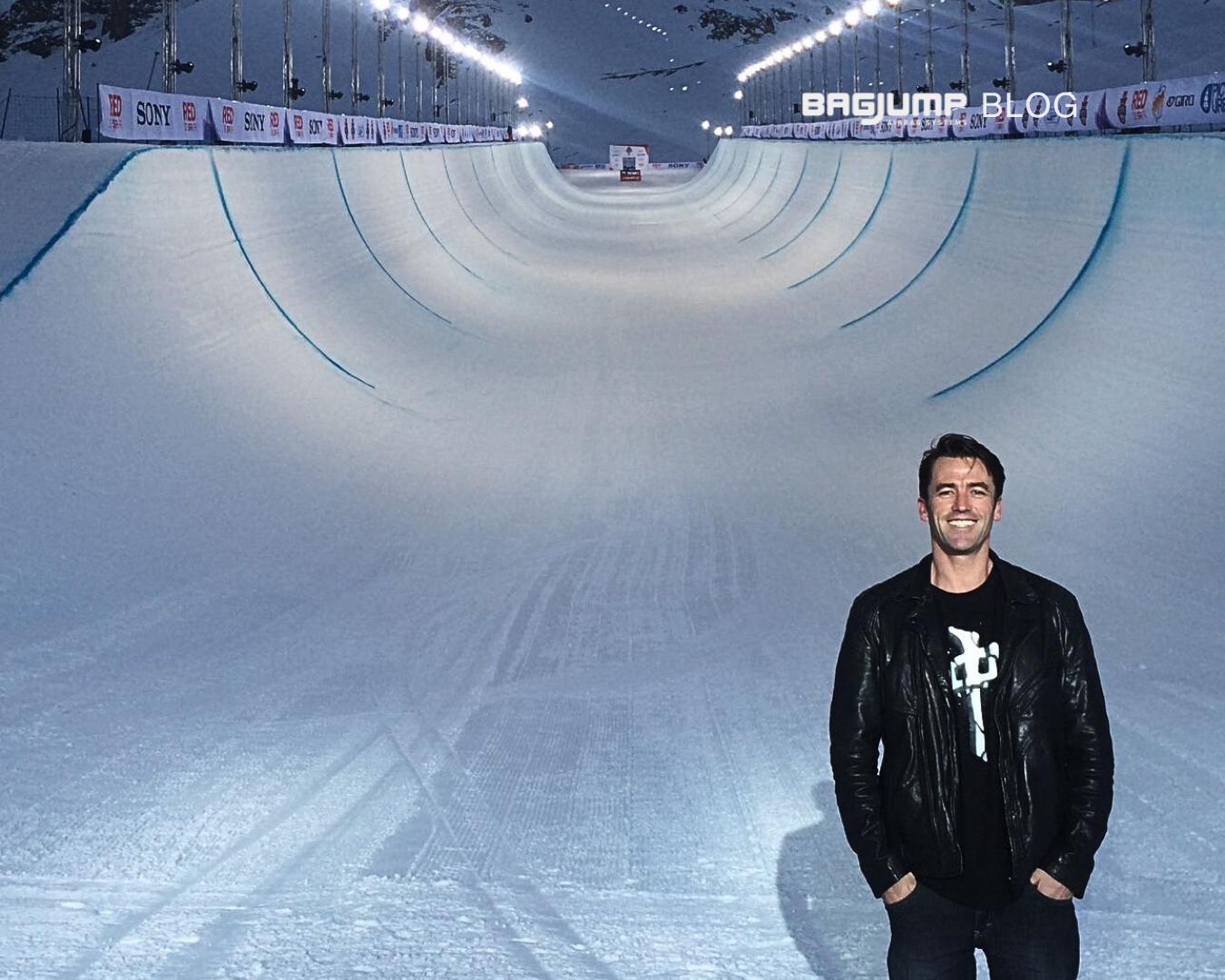
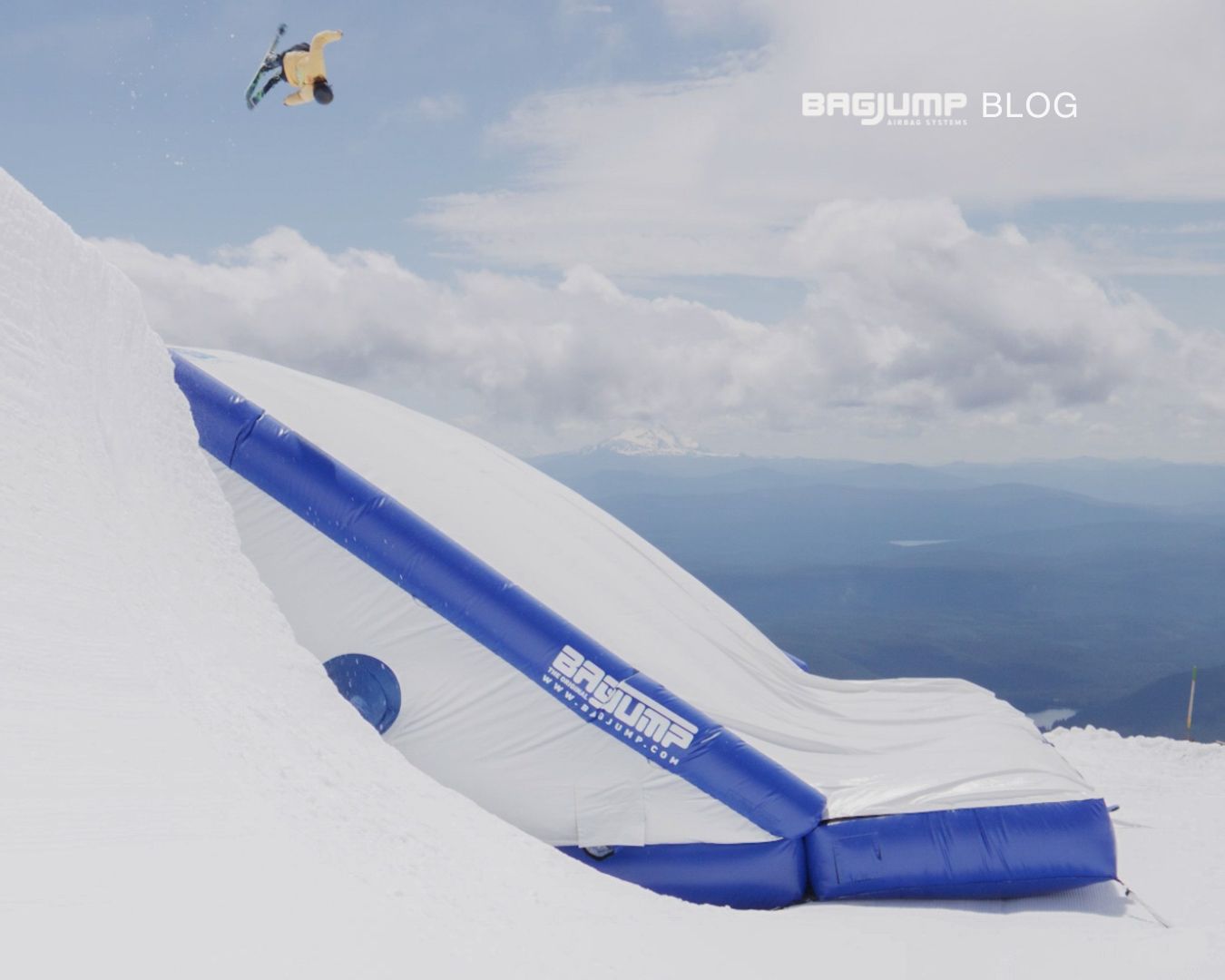
Halfpipe riders use airbags to learn new tricks before ever attempting them on the wall. Slopestyle athletes spend extensive time on dry-slope airbag jumps to fine-tune grabs, rotations, and style. From junior development programs to Olympic teams, airbags are now built into training schedules worldwide.
Trennon’s generation grew up with airbags as part of normal progression. In his role as the current coach of the Canadian national snowboard team, airbags are not a shortcut. “It’s simply how the sport works now. If an athlete isn’t using airbags, they’re likely at a disadvantage compared to those who are,” he said.
The Three-Step Progression Model
Trennon described for us the progression model that most Olympic programs follow today.
The first step is trampoline training. Athletes break down the fundamentals of a trick and build body awareness with high repetition in a short amount of time.
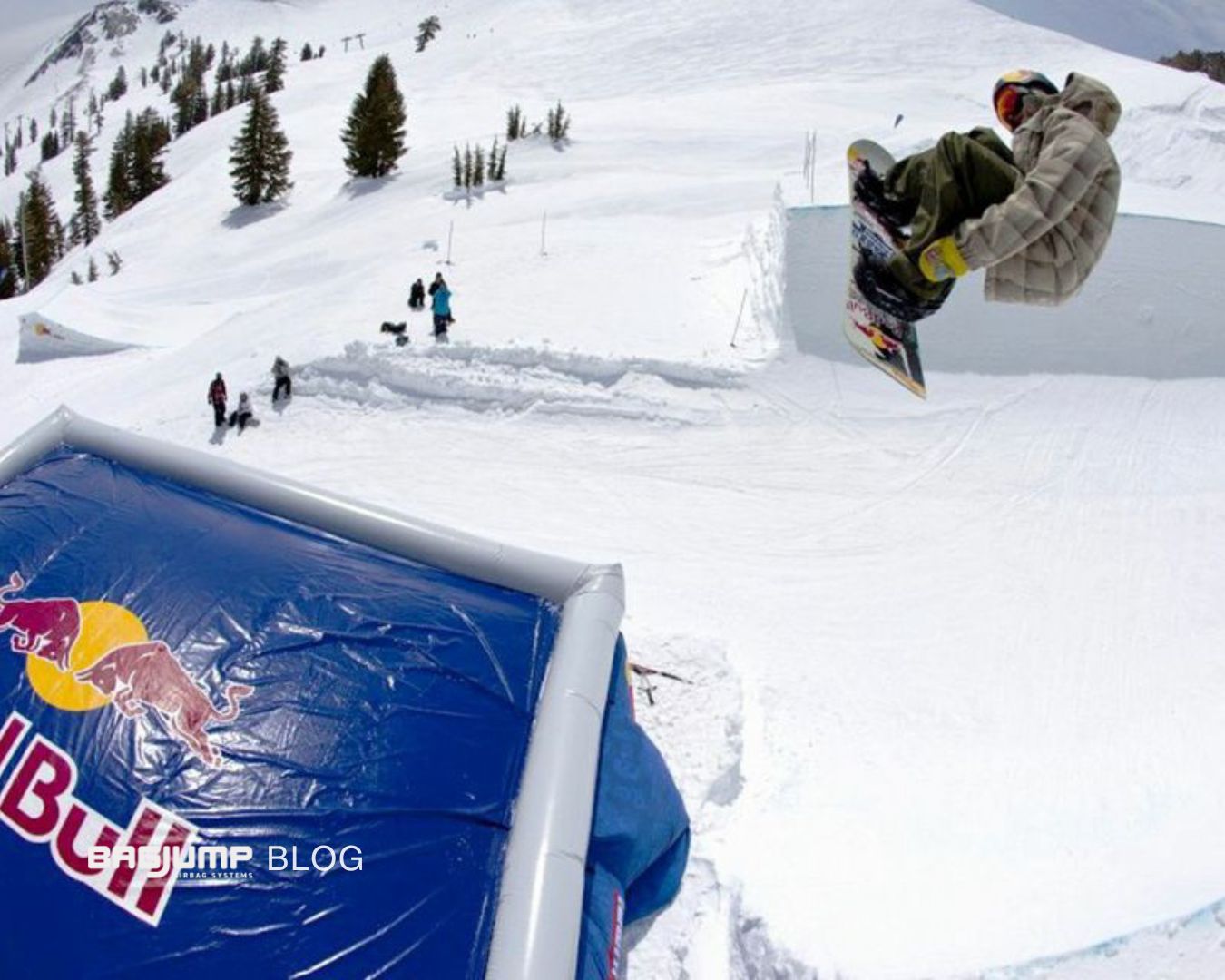
The second step is airbag training. This is where things become real. Athletes perform the trick from a vertical or snow-style takeoff with skis or a snowboard on their feet. The movement is no longer abstract. It is directly connected to how the trick will feel on snow.
The final step is snow. Only once the athlete is consistent and confident on the airbag does the trick move into the halfpipe or slopestyle course.
Precision Matters More Than Ever
Halfpipe and slopestyle don’t allow much room for error.
Even if an athlete can land a trick successfully, they still need to land it in the exact right spot, at the right speed, and with the correct setup for the next feature. That level of precision is difficult to develop on snow alone.
Airbags allow athletes to focus on consistency, not just completion. They can practice landing in the same place every time and dial in timing and spatial awareness. This consistency becomes critical when transferring skills to a halfpipe wall, where margins are razor-thin.
Charles emphasized that snow airbags aren’t just about learning tricks. They’re about learning to repeat them under control.
Confidence Is the Real Advantage
Beyond safety and repetition, airbags deliver something less tangible but equally important: confidence.
When an athlete knows they’ve already landed a trick dozens of times on an airbag, the mental barrier disappears. The first attempt on snow no longer feels like a gamble. It feels like the next logical step.
This confidence directly translates into performance. Athletes ride more decisively, commit more fully, and progress faster. Across Olympic programs, that psychological advantage is one of the biggest reasons airbags remain in constant use, even deep into competition seasons.
Used Right Up to the Olympics
Airbag training isn’t limited to early-season development.
According to Trennon and Charles, athletes continue using airbags throughout the year, sometimes up to a month before the Olympics, depending on individual needs. “The goal isn’t reckless progression. It’s maintaining sharpness, confidence, and consistency without unnecessary risk,” said Trennon.
“Airbags provide a way to keep learning and refining while preserving athlete health during the most critical phases of an Olympic cycle,” he mentioned.
A Bridge Between Athlete and Snow
At its core, airbag training serves one purpose: creating a safe bridge between learning and execution.
As Trennon puts it: “Airbags form a connection between the athlete and the sport that balances safety with progression. They allow athletes to push limits while staying healthy, both physically and mentally.”
In a sport where careers can be shortened by a single bad landing, that balance matters more than ever.
Why Airbags Are Here to Stay
Olympic snow sports will only continue to evolve. Tricks will get bigger, rotations more complex, and expectations higher. In that environment, airbags are not a trend. They are infrastructure.
They reduce risk, accelerate learning, build confidence, and allow athletes to show up on snow prepared rather than hopeful. That’s why Olympic athletes don’t skip airbag training.
They use it to make sure that when they finally hit snow, they’re not guessing. They’re ready.
Read More