The Most Common Gymnastics Injuries—and How to Avoid Them
Gymnastics is one of the most demanding sports in the world, and injuries can cost careers. These are some of the most common injuries and how athletes can avoid them.
More than 80,000 gymnasts are treated in emergency rooms each year—and we are talking only about the United States. This is what the American Orthopaedic Society for Sports Medicine said in one of their research papers. There is no doubt that gymnastics is a sport of strength, flexibility, power, and grace. But behind that elegance and skill lies a reality that many coaches and athletes have to face every day: injuries are common.
The good news is that most of these injuries are preventable. We talked with experts in the gymnastics industry about the risks of the sport, and in this article, we would like to tell you more about injuries and injury prevention in gymnastics.
Let’s break down the most frequent gymnastics injuries, why they happen, and how proper training and routine changes can help reduce the risks.

1. Ankle Sprains and Fractures
Ankle injuries are some of the most common in gymnastics. According to the American Academy of Orthopaedic Surgeons, gymnasts frequently injure their ankles due to misaligned or uneven landings that strain the ligaments around the joint. This happens particularly during the landing.
But what is happening in the body during an ankle injury? When an athlete lands with the foot twisted or rolled, it overstretches the ligaments. In some cases, athletes even fracture bones in the ankle or foot. This happens more regularly to gymnasts training on foam pits or hard mats—especially when the landing is unpredictable or the athlete does not have enough experience.
How to prevent ankle injuries:
Coaches and athletes should ensure landings are practiced on consistent surfaces. For athletes without much experience or training a new skill, Bagjump airbags are an excellent way to start. In the end, the athlete needs to feel comfortable landing perfectly and not risk any injury. Keep in mind: Traditional landing surfaces contribute to long-term joint degeneration even in athletes who avoid major injuries. Training with a Bagjump reduces the impact load and helps preserve joint health over the long term.
2. Wrist Fractures and Growth Plate Injuries
Gymnasts place a lot of pressure on their wrists during exercises like back handsprings, vaulting, or bar work. According to a study published in the Journal of Pediatric Orthopaedics, wrist injuries are one of the most common overuse injuries in young gymnasts—especially growth plate stress fractures. These types of injuries not only take a big toll on the gymnast’s body, but also mentally.
How to prevent wrist fractures and plate injuries:
Building wrist strength and flexibility happens only with time. It requires years of training in the best conditions possible. The best way to prevent these injuries is by reducing the frequency of high-impact landings. Landing on a softer surface—especially at the beginning of a career—allows gymnasts to attempt difficult movements with less risk to the upper body. Experts agree; using gymnastic airbags is ideal to reduce the repetitive load during high-volume training cycles.

3. Knee Ligament Injuries
Run, jump, rotate, and land. It looks easier when it is done to perfection, but complex landings from flips, especially with slight rotation or imbalance, can put dangerous stress on the knees. According to medical experts, ACL injuries in gymnastics are some of the most common due to repetitive strain and awkward landings.
In these cases, a sudden twist or hyperextension, especially when landing with straight legs or in a locked position, can cause it to rupture.
How to prevent knee injuries:
The basics in the learning process are essential to prevent such injuries. Teaching athletes to land with bent knees and proper alignment is critical. According to coaches and athletes, practicing those landings on an airbag helps gymnasts practice thousands of times using the correct technique with less force and, in the long run, build muscle memory safely.
4. Spinal Injuries and Back Pain
Gymnasts bend, twist, and arch their backs frequently. This is even more common in exercises like back handsprings, bridges, and walkovers. The British Journal of Sports Medicine mentions that repetitive spinal extension can lead to overuse injuries, and the most common one would be spondylolysis, a stress fracture of the vertebra.
Spondylolysis occurs when hyperextension of the lower back weakens the vertebrae. Not only that. When a case of spondylolysis is left untreated, it may progress to spondylolisthesis, an injury in which one vertebra slips over the other.
How to prevent back injuries:
The easiest way to prevent spinal injuries and back pain is a proper warm-up. Additionally, building core strength and resting between high-intensity training sessions helps reduce the risk.
On the other hand, while airbags do not have a direct link in preventing back injuries, they give athletes the mental freedom to fully commit to skills with less fear, reducing mental error-related injuries.
5. Concussions and Head Injuries
While less frequent in gymnastics, head and neck injuries can be serious and career-ending. These types of injuries often occur during falls when the athlete loses control and lands on their head. This is something to be very careful about, as even minor concussions can have long-term effects if not treated properly.
How to prevent concussions:
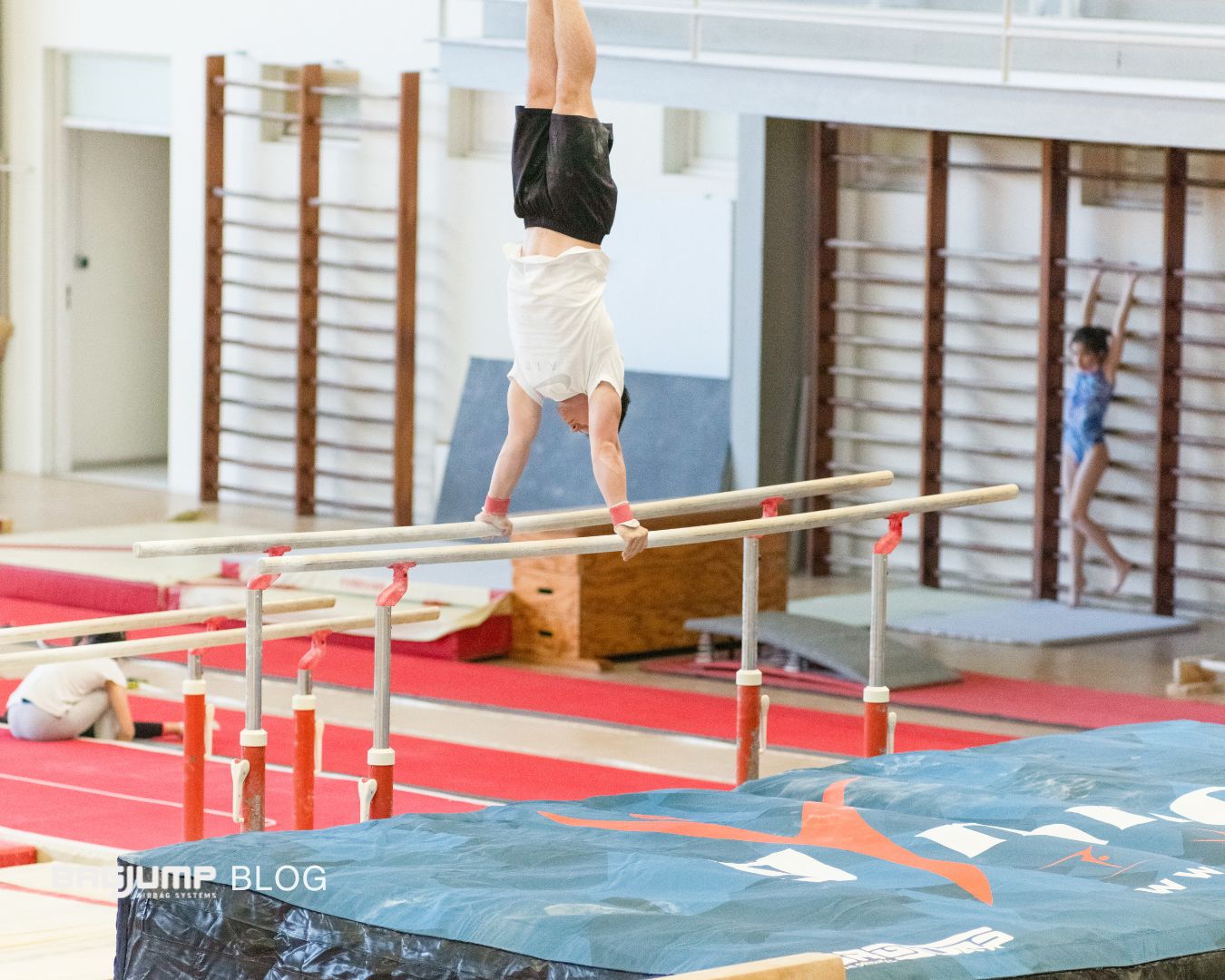
Ensuring a safe landing zone at all times and having the athlete develop a proper progression are critical. A big change we are seeing in the gymnastics industry is how many gymnastic facilities are now changing to Bagjump airbags. They notice the improvement, as athletes always land in a consistently soft area.
Gymnastics is about pushing the limits—but not at the cost of an athlete’s long-term health. Injuries aren’t just bad luck. Many are the result of repeated strain, poor landing surfaces, or unsafe equipment. Bagjump airbags aren’t just about cushioning. They are about giving gymnasts the ability to train smarter, longer, and safer.
If you are not training on a Bagjump yet, find out which facilities in your area use one and give it a shot. You will notice the difference right away from the first jump.
Read More